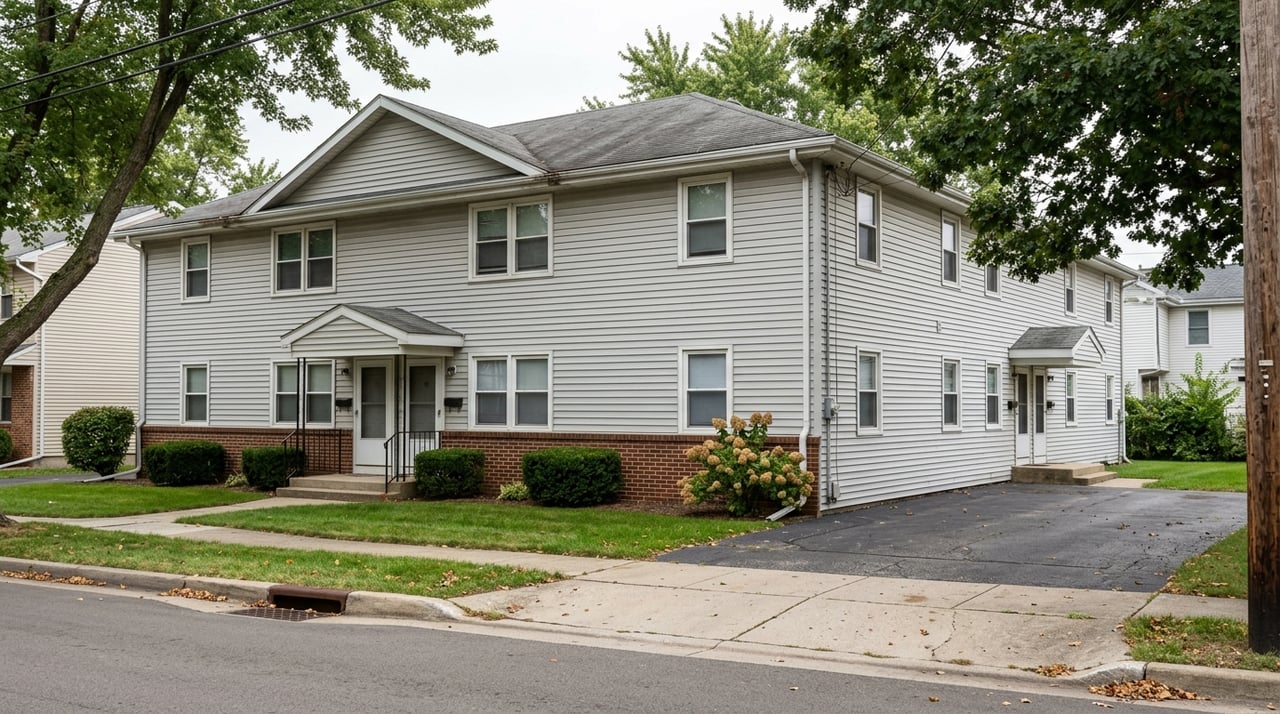
Investing In North Haledon NJ Multi-Family Properties
April 2, 2026
April 2, 2026
Looking at multi-family property in North Haledon? You are not alone, but this is not the kind of market where you can rely on broad apartment comps and assume the numbers will work. North Haledon is a small, mostly owner-occupied borough, which means investment opportunities can be limited, highly specific, and worth a closer look. If you are thinking about buying here, this guide will help you understand the local market, zoning limits, compliance rules, and the underwriting details that matter most. Let’s dive in.
North Haledon is a small suburban borough in Passaic County with an estimated population of 8,854 as of July 2024. According to the U.S. Census QuickFacts, the borough has a 93.7% owner-occupied housing unit rate, a median household income of $125,313, and a median gross rent of $2,369.
Those numbers matter because they point to a market that is more stable and less renter-heavy than many nearby towns. The same Census data also shows that 90.1% of residents lived in the same house one year earlier, which suggests lower turnover and a more established residential base.
While North Haledon is not a major apartment market, it still offers rental demand. Based on local housing patterns, the renter pool appears more household-oriented than transient, especially when you consider the borough’s 2.72 persons per household and high owner-occupancy rate.
The local population is also diverse. Census data shows that 19.9% of residents are foreign-born and 30.2% speak a language other than English at home, which can make clear leasing communication and tenant service even more important in day-to-day property operations.
One challenge for investors is that North Haledon does not have a large public apartment inventory. RentCafe’s market page for North Haledon lists average rent as not available because its reporting is based on apartment buildings with 50 or more units.
That does not mean rentals are absent. It means public comp data is thin, so underwriting often depends on very local knowledge, comparable nearby markets, and careful review of each property’s actual income, expenses, and legal status.
North Haledon sits in an interesting position compared with nearby North Jersey towns. Based on Census comparisons, Haledon has a 47.6% owner-occupied rate and median gross rent of $1,750, while Fair Lawn reports 78.1% owner-occupied and $1,917 median gross rent, Totowa reports 73.6% owner-occupied and $2,072 median gross rent, and Wayne reports 78.6% owner-occupied and $2,164 median gross rent.
That puts North Haledon toward the higher-rent, more owner-occupied side of the local suburban market. For you as an investor, that can mean a tighter supply of small multi-family opportunities and more competition when a solid property becomes available.
This is one of the biggest issues to understand before you buy. North Haledon’s residential districts permit only one-family dwellings, which means broad by-right multifamily development is not the norm.
The borough does have some more specialized zoning options. Under the local code, the MFTH zone is tied to a specific parcel, Block 19, Lot 1, and permits only townhouses with a maximum of six units.
There is also a B-2 Affordable Housing Overlay Zone that allows mixed-use buildings and multifamily residential on upper floors. In practical terms, that means many investment plays in North Haledon are more likely to involve existing small multi-family properties, possible conversions, or limited redevelopment opportunities rather than straightforward ground-up apartment projects.
In a zoning-constrained market, legal status matters just as much as square footage. Before you trust a listing’s unit count or projected rents, you should confirm whether the property is a legally conforming multifamily, a grandfathered nonconforming use, or part of a specific overlay or affordable housing structure.
That step is critical because a property may look like a multi-family deal on paper while carrying limitations on future expansion, reconfiguration, or rental use. In North Haledon, details like parking, layout, and municipal approvals can have a major impact on value.
North Haledon has a local rental-property ordinance that directly affects landlords. According to the borough code, each rental unit requires annual inspection, registration and licensing before occupancy, and proof that municipal taxes, water and sewer charges, and other assessments are current before a license can be issued. You can review those requirements in the borough’s rental-property ordinance.
If a unit does not pass inspection, it cannot be rented until the issues are corrected and the property is re-inspected. The rental license also expires on December 31 of the calendar year, so this is not a one-time box to check during acquisition.
State-level rules can also affect your costs and timeline. New Jersey landlords must provide tenants with the Truth in Renting guide, which covers core topics like lease agreements, rent collection, habitability, evictions, and security deposits.
For older properties, lead compliance is especially important. New Jersey requires inspections for certain pre-1978 single-family, two-family, and multiple-rental dwellings by turnover or on the required inspection schedule, and then every three years or at turnover after that. The state outlines these rules in its lead-based paint inspection guidance.
If you are looking at a two- to four-unit building in North Haledon, that is a key due diligence item. Any needed remediation, repairs, or lead-safe certification costs should be factored into your acquisition model from day one.
If a property includes affordable or restricted units, you should not underwrite those units as market-rate rentals. The borough’s affordable housing provisions include control periods of at least 30 years, and rent structures for restricted units are tied to COAH rules rather than open-market pricing.
That can significantly change projected income. A property with restricted units may still be a fit for your strategy, but only if the restrictions are clearly understood upfront.
Even though North Haledon itself is a small and thinly traded market, broader Passaic County multifamily data can help frame demand. In the Wayne Township market study, Passaic County had about 25,420 multifamily units, a 4.0% vacancy rate, and just 0.7% vacancy in Class B and C properties.
The same study reported average asking rent of $2,182 overall, $3,127 for Class A, and $1,874 for Class B/C, with annual asking rent growth over the prior four years averaging 6.2% for Class A and 5.3% for Class B. For small local investors, that suggests there is still meaningful demand for practical, more affordable rental housing in the area.
Cap rates should be handled carefully in a market like this. A Northern New Jersey multifamily report from Matthews placed the average cap rate around 6.1% in Q3 2025, while also noting that stabilized assets usually trade at lower cap rates and value-add properties generally require higher cap rates due to added risk.
For a North Haledon deal, that means you should focus on stabilized NOI, not just current rent roll or optimistic pro formas. A low in-place cap rate may still make sense if the path to stabilization is clear, but only if you have realistic assumptions around costs, downtime, and compliance.
If you are evaluating a property in North Haledon, here are some of the most important items to review before making an offer:
In a market with limited inventory, these details can make the difference between a solid long-term hold and an expensive surprise.
North Haledon can be appealing if you want a suburban setting with relatively strong rent levels and a stable local housing base. It may also work well if you are looking for a smaller multi-family property, a house hack opportunity, or a deal where local knowledge can uncover value others miss.
At the same time, this is not the easiest place to buy on autopilot. Zoning is restrictive, public comps are limited, and local compliance rules can directly affect rentability and timing. In other words, North Haledon can reward careful investors, but it usually does not reward shortcuts.
If you are serious about investing in North Haledon NJ multi-family properties, your edge will come from careful underwriting and local verification. You want to know exactly what you are buying, what is legally permitted, what repairs or inspections may be required, and how the income looks after the property is truly stabilized.
That is where local guidance can save you time and help you avoid costly assumptions. If you want help evaluating opportunities in North Haledon or nearby northern New Jersey towns, connect with Christoulla Crawford for knowledgeable, hands-on support with investor purchases, rentals, and multi-unit strategy.
I work with sincerity and have built my company's foundation on the strong values of integrity, efficiency, client advocacy, and results. I have many years of experience with project management before diving into the real estate industry, and I go the extra mile to deliver customer satisfaction. Begin your journey into real estate with me today.