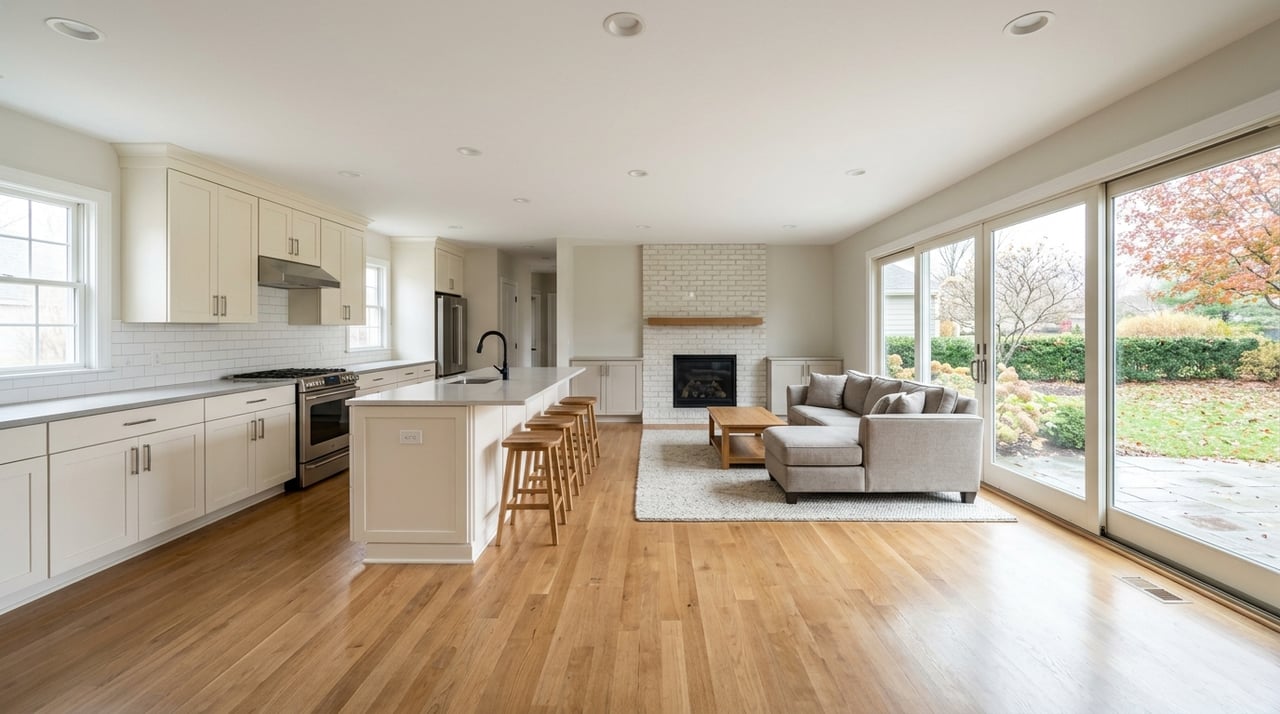
Coordinating A Move-Up Purchase In Wyckoff Township
June 25, 2026
June 25, 2026
If you are trying to buy your next home in Wyckoff while selling your current one, timing can feel like the hardest part of the whole move. You want to unlock your equity, avoid unnecessary stress, and stay competitive in a market where well-priced homes can move fast. The good news is that with the right sequence, a clear financing plan, and realistic expectations about Wyckoff’s pace, you can make a move-up purchase feel much more manageable. Let’s dive in.
Wyckoff is not a slow market where you can casually list, wait, and then start thinking about your next purchase. As of late spring 2026, local snapshots showed average and median pricing above $1 million, with homes often going pending in about 14 days. That creates both opportunity and pressure for move-up buyers.
If your current home is market-ready, you may be able to capture strong demand. At the same time, you need a plan for where your down payment comes from, how much carrying cost you can handle, and how competitive your next offer will look. In Wyckoff, that planning matters because inventory remains limited.
Current market snapshots point to a million-dollar-plus local market. Zillow reported an average home value of $1,156,176 and 35 homes for sale at the end of May 2026, while Realtor.com showed a median listing price of $1,275,000 and 28 homes for sale in May 2026.
Those numbers are not identical because the sources use different methods. Still, they tell the same story: Wyckoff is a high-priced market with limited choices, and buyers need to be prepared before they start making offers.
Both Zillow and Realtor.com showed a median time to pending of 14 days. In practical terms, that means you may not have much time to get preapproved, study your options, and decide how to structure your purchase once the right home appears.
That is especially important for move-up buyers because your transaction is usually tied to the sale of your current home. If you wait too long to prepare, you can lose momentum just when the market expects quick decisions.
In Wyckoff, buyers tend to pay close attention to more than square footage and finishes. The township notes that property taxes are divided among municipal government, Bergen County, the Wyckoff Local Public School District, and the Ramapo-Indian Hills Regional School District.
That means your monthly ownership cost deserves careful review before you buy up. A larger home may improve space and function, but the true cost of the move includes taxes, insurance, mortgage payment, closing costs, repairs, and moving expenses.
A move-up purchase usually works best when you define your numbers before touring homes. That starts with understanding how much equity you expect to pull from your current sale and how much cash you will need for the next closing.
Consumer budgeting guidance cited in the research report notes that closing costs typically run about 2% to 5% of the purchase price, separate from the down payment. You should also leave room for moving costs, repairs, and an emergency cushion so your next home feels exciting, not financially tight.
Your move-up gap is the difference between what you net from your current home and what your next home will cost. In Wyckoff, where active listings currently range from roughly the high $800,000s to well above $4 million, that gap can vary widely depending on your target price band.
For many households, the real question is not just "How much house do I want?" It is "How much monthly payment and upfront cash do I want to carry comfortably?"
Mortgage rates still matter, even in a higher-end market. Freddie Mac reported the 30-year fixed-rate mortgage at 6.47% on June 18, 2026.
A small rate shift can change buying power enough to affect your target price, down payment strategy, or comfort level. That is why lender coordination should happen early, not after your current home hits the market.
Selling first is often the most conservative path. It gives you a clearer picture of your available equity and reduces the risk of carrying two mortgage payments at once.
This option can be especially helpful if you need sale proceeds for your next down payment. The tradeoff is that you may need temporary housing or a short-term backup plan if your next purchase takes longer than expected.
Buying first can work if the next home is hard to replace or if you strongly want to avoid moving twice. This path usually requires stronger financial flexibility because your lender may need to document your ability to carry the new home, your current home, any bridge financing, and your other obligations.
In other words, this strategy is possible, but it should be deliberate. You want a very clear debt-to-income picture before writing offers.
For many move-up buyers, a contingency offers the middle ground. A home-sale contingency gives you time to sell your current home before closing on the next one, while a home-close contingency gives you time to close on your current home before purchasing the next home.
This can be one of the cleanest ways to coordinate both sides of the move when you still need equity from your first sale. It gives you structure, but it can also affect how competitive your offer looks to a seller.
A contingency can protect you, but it may also make your offer less attractive than a non-contingent one. According to the transaction guidance cited in the research report, sellers may continue showing the property and may use a kick-out clause.
That means if another buyer submits a stronger non-contingent offer, you may have to remove your contingency or step aside. In a fast market, you should go into that process with clear timelines and a decision plan already in place.
Some transactions also use an early move-in or a rent-back arrangement to bridge the gap between closings. These terms can be helpful when dates do not line up perfectly, but they should be specific and carefully negotiated.
The goal is simple: create enough flexibility to keep your move on track without leaving key details open to confusion.
In a market like Wyckoff, your current home is not just something you need to sell later. It is a major part of your buying strategy.
That is why preparation matters. If buyers in this market are watching condition, presentation, and carrying costs closely, your listing needs to enter the market in a strong position.
Local guidance in the research report suggests cosmetic improvements can help, while major renovations often do not return their full cost. For many move-up sellers, that means the smartest prep work is usually practical rather than dramatic.
Think clean presentation, strong first impressions, and pricing based on recent local comparable sales. In Wyckoff’s upper price bands, discipline often matters more than over-improving.
Because property taxes are an important part of local buyer decision-making, it is smart to review them early in your planning process. The township assessor also notes that assessments rely on sales, income, and cost data, with appeals generally due by April 1.
You do not need to become a tax expert, but you do want accurate numbers and a clear understanding of how taxes affect both your current home’s marketability and your next home’s monthly cost.
If you want a simple way to think about the process, start here:
This kind of plan helps you move with purpose instead of reacting to every new listing or deadline.
A move-up transaction is really two transactions that need to support each other. You are balancing pricing, prep, lender timing, contract structure, and negotiation on both the sale and purchase side.
That is where local knowledge matters. In Bergen County, broader 2026 data still show an active market with 2.4 months of supply, 40 days on market year to date for single-family homes, and 103.3% of list price received year to date. Even if individual listings vary, the larger pattern says strategy still matters.
When you understand the pace, the price bands, and the likely concerns buyers and sellers will have in Wyckoff, you can make calmer and better-timed decisions. If you are planning a move-up purchase and want a clear local strategy for both sides of the transaction, reach out to Christoulla Crawford for a free market consultation.


I work with sincerity and have built my company's foundation on the strong values of integrity, efficiency, client advocacy, and results. I have many years of experience with project management before diving into the real estate industry, and I go the extra mile to deliver customer satisfaction. Begin your journey into real estate with me today.